Does a niqab have to be black?
No. Black is a widespread custom, not a requirement. The two reports usually cited for it both turn on a narrator graded here as weak, and the underlying rule falls back to local custom.
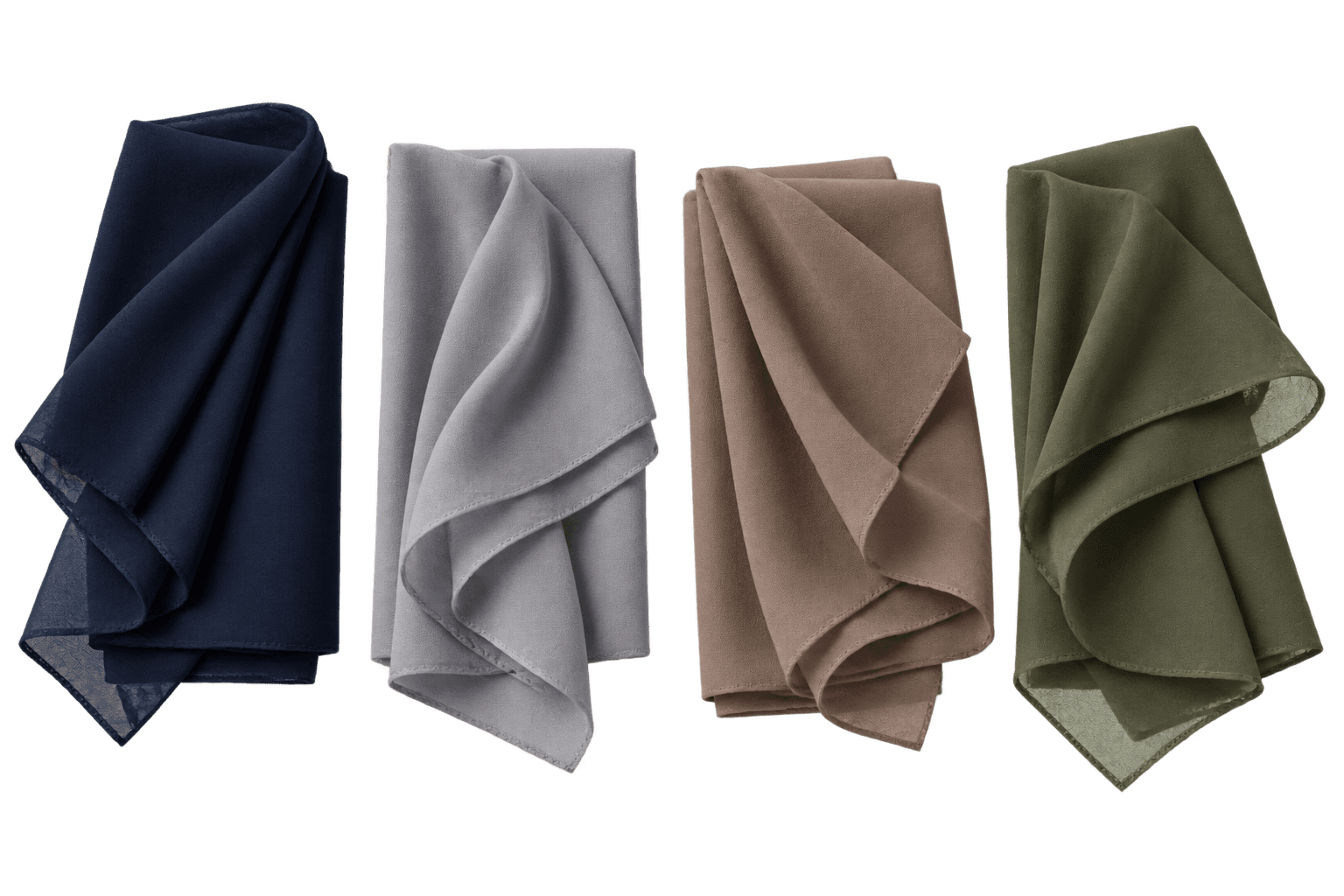
Black is prevalent enough to be widely assumed prescribed. It is not.
The evidence usually cited
Two reports are ordinarily advanced for black as the legislated colour, both describing the women of the Anṣār going out as though crows sat on their heads.
يُدْنِينَ عَلَيْهِنَّ مِن جَلَابِيبِهِنَّ
Let them draw their jilbābs over themselves.
One comes through Ummu Salamah, reported by ʿAbd al-Razzāq al-Ṣanʿānī, and gives the jilbāb verse as its occasion. The other comes through ʿĀʾishah, reported by Ibnu Abī Ḥātim, and gives al-Nūr 24:31.
When this verse was revealed — “yudnīna ʿalay-hinna min jalābībi-hinna” — the women of the Anṣār went out as though there were crows upon their heads, from their stillness, and upon them were black wraps they wore.
Both chains pass through the same narrator — ʿAbd Allāh b. ʿUthmān b. Khuthaym, by way of Ṣafiyyah bt. Shaybah. Many graded him thiqah or ṣadūq; the assessment that decides the question here is that he is laysa bi-al-qawī — not strong. Al-Nasāʾī states plainly that he is laysa bi-al-qawiyy in ḥadīth, and records ʿAlī b. al-Madīnī's harsher verdict that he is munkar al-ḥadīth. Al-Ṭaḥāwī describes him as criticised for poor memory and carelessness in transmission; al-Dāraquṭnī grades him ḍaʿīf, and Ibnu Rajab repeats laysa bi-al-qawī. Even Ibnu Ḥibbān, who lists him among the thiqāt, adds that he kāna yukhṭiʾ: he used to err. Al-Zalayʿī's conclusion is that a report resting on Ibnu Khuthaym alone cannot be relied on.
On this assessment, the case for black as a requirement is weak.
Even granting the report
Even if the report were sound, what it describes is the head-covering alone — not an entire black outfit including dress and wrap, as the later custom became. The wording speaks only of a black kisāʾ and "as though there were crows upon their heads." And even that would not establish black as legislated for the head-covering: on the plain sense of the report, the women of the Anṣār acted spontaneously, reaching for whatever cloth was at hand to obey a verse that had just been revealed. No later ḥadīth or report shows Muslim women deliberately choosing black as a prescribed or recommended color.
The operative rule
Absent a sound text specifying a colour, the question returns to ʿurf — local custom, and what does not attract attention in a given setting. On that basis a batik or otherwise coloured niqab is unobjectionable. A heavily patterned or decorative one is treated differently, on the ground that it works against the garment's function rather than its colour.
Why the assumption persists
Black became customary in the Arabian peninsula and travelled with the modern revival of the practice. What is customary and what is required are distinct questions; conflating them narrows the practice unnecessarily.
Check your understanding
Is black the religiously required colour for niqab?